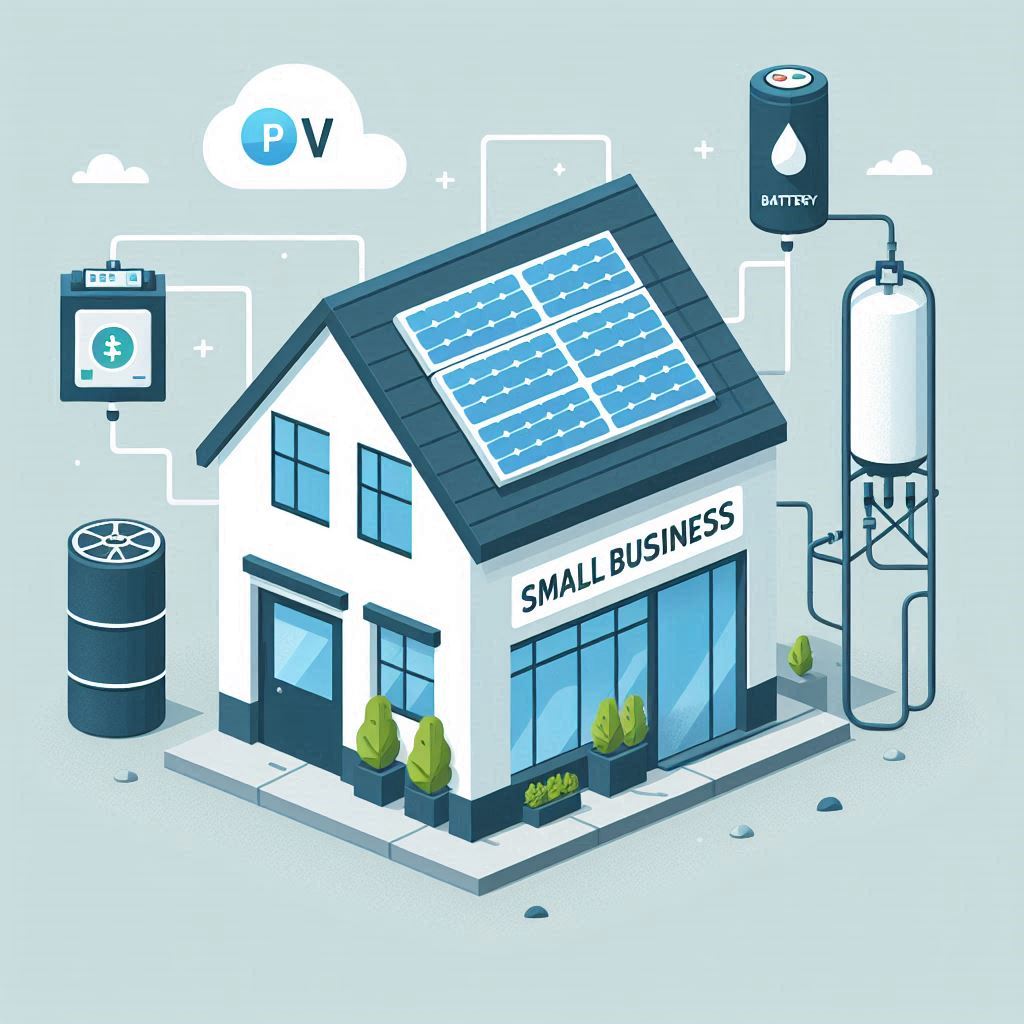
🔋⚡ My 3‑part Series in LinkedIn
Working in the renewable‑energy sector, I speak with many SMB owners who tell me the same thing:
“I know PV is important… but what storage solution actually makes sense for us? And how does the heat pump fit into all this?”
These are honest questions — and the answers are rarely simple.
So I decided to put together a short series to help bring some clarity, based on what I’ve learned from real projects, real customers, and real challenges:
1️⃣ Batteries vs. Hydrogen — strengths, limits, and real use‑cases
2️⃣ Why hybrid systems (PV + battery + hydrogen) are becoming the practical path forward
3️⃣ How heat pumps change the entire design — and why electrified heating makes storage more important, not less
I’m not selling any particular solution here. The goal is simply to help SMEs think in systems, not single components — and to share what I’m seeing on the ground as Germany and Europe move deeper into the energy transition.
Part 1: Batteries, Hydrogen & the New Reality for SMB Energy Systems
For many SMBs in Germany and across Europe, the energy transition is no longer a question of if — but how. PV has become mainstream, electricity prices remain unpredictable, and electrification is accelerating. Suddenly, topics like battery storage, hydrogen, and even heat pumps are no longer “future tech”… they’re strategic decisions.
In my work with AI‑powered content creation, I’ve been diving deep into how SMBs can navigate this complexity with clarity and confidence. This series breaks down the core components of a modern energy system — starting with batteries.
⚡ What Batteries Do Best
Batteries (usually lithium‑ion) shine in short‑ to medium‑term storage. They:
- Capture PV energy generated during the day
- Release it in the evening and at night
- Deliver high round‑trip efficiency (85–95%)
- Respond instantly to demand peaks
For many SMBs, this makes batteries a logical first step to raise self‑consumption and reduce exposure to volatile electricity prices.
Strengths:
- Perfect for daily cycling
- Mature technology with strong ecosystem support
- Ideal for lighting, IT, machinery, EV charging
Limitations:
- Not economical for multi‑week or seasonal storage
- Scaling capacity for winter demand becomes expensive
- Degradation over many cycles
If the goal is to shift solar energy from midday to evening — or buffer against peak tariffs — a battery‑centred setup often delivers the fastest ROI.
🔍 Up Next…
In Part 2, we’ll look at where hydrogen storage outperforms batteries and why hybrid systems may represent the most realistic future for SMBs.
If you’re exploring how AI‑augmented content can make complex energy topics accessible — follow along.
——–
#PV #SolarEnergy #EnergyStorage #BatteryStorage #Hydrogen #Wasserstoff #Wärmepumpe #HeatPump #SMB #Mittelstand #Energiewende #CleanTech #FutureOfEnergy
